How to grow alpine strawberries in containers
by Saulius · Last updated
Growing alpine strawberries in pots is reletivly simple and highly rewarding. Alpine strawberries are compact, everbearing plants that produce small, highly aromatic and great tasting fruit over a long season.
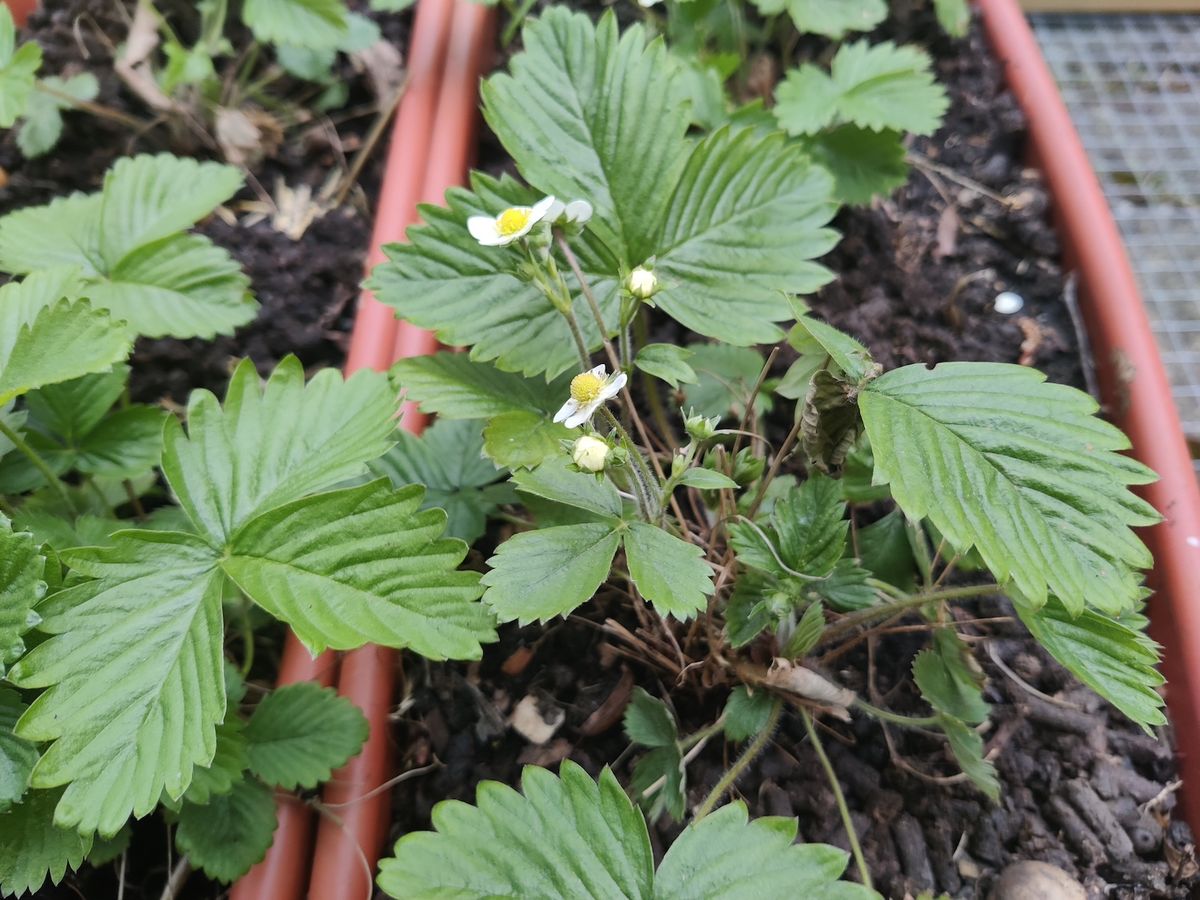
Alpine Strawberries
Alpine strawberries originate from a wild type of strawberry, native to Europe and some parts of Asia. People started to cultivate them long time ago, even before modern large strawberies became common.
They are still popular among gardeners today, because of their very fragrant, sweet, delicious berries and continuos harvest through the season. Also they are reletivly low-maintenance if correctly setup.
What size containers
Start with a container that has good drainage and is at least 15–20 cm deep. Use a high-quality, well-draining potting mix enriched with compost. Place the pot in a sunny position—ideally 6–8 hours of sunlight daily—though alpine varieties tolerate partial shade better than regular strawberries.
Plant seedlings or young plants with the crown (where leaves meet roots) just above the soil surface. Space multiple plants about 15 cm apart if using a larger container. Water regularly to keep the soil consistently moist but not waterlogged, as pots dry out faster than ground soil.
Feed lightly every couple of weeks with a balanced liquid fertilizer to support continuous flowering and fruiting. Remove weeds and dead leaves to keep plants healthy. Unlike larger strawberry varieties, alpine strawberries produce few or no runners, so they stay tidy and are ideal for containers.
Harvest berries frequently once they ripen to encourage more production. With proper care, alpine strawberries can fruit from late spring through early autumn, providing a steady supply of sweet, fragrant berries.
Light, water, feeding
- Light: keep containers in the place with ideally 6–8 hours of direct sun; however, alpine strawberies tolerate partial shade as well.
- Water: deep soaks, then let the top 3cm dry out before watering again. highly recomended to apply mulch
- Feeding: xxx.
Yearly progress
Below is the summary of tasks I do for my container grown alpine straberries during the season.
April
In early April, once the weather gets slightly warmer, I'll start doing bit of work outside. First for alpine strawberry containers is dividing and repotting:
- Splitting or dividing means separating the larger alpine straberry plant into 2 or 3 smaller parts. Over the previous year your alpine straberry plants grew large and are ready to be divided into parts. With each part becoming a healthy amd productive plant.
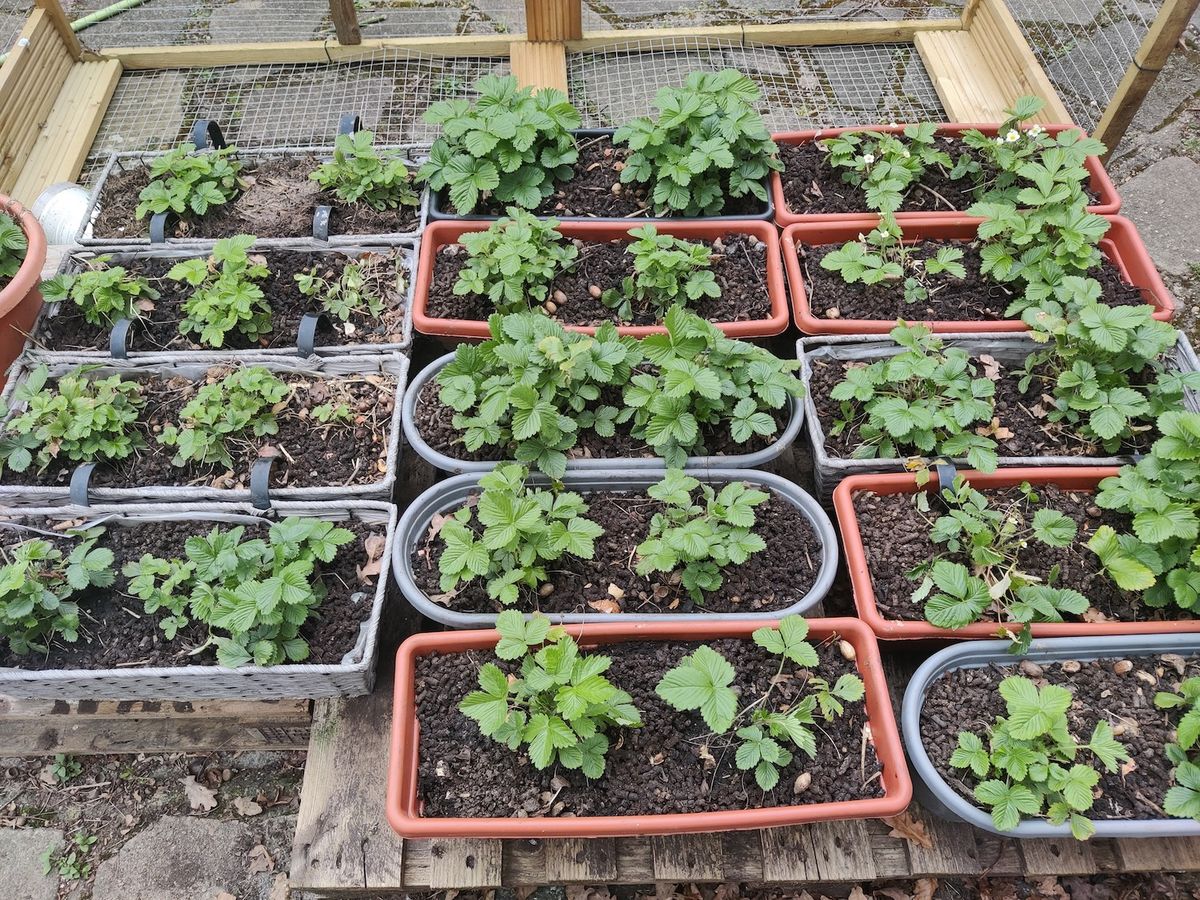
- Then, I replace about 30% of the soil in containers with the fresh compost and repot the divided straberry bushes. Mostly I fit 2 or 3 of them per 50cm lenght narrow container. I prefer using home made compost for this, but any good quality compost can be used.
- Water the newly potted strawberry plants well for next few days, it will help them to extablish roots.
- After above steps are done, I also apply some chicken manure pellets to each pot. This gives alpine strawberries extra nutriens untill summer time.
May
Even in April during the repotting, you could clearly see the small frowers being formed. In May, its a full on flowering time for alpine strawberies.